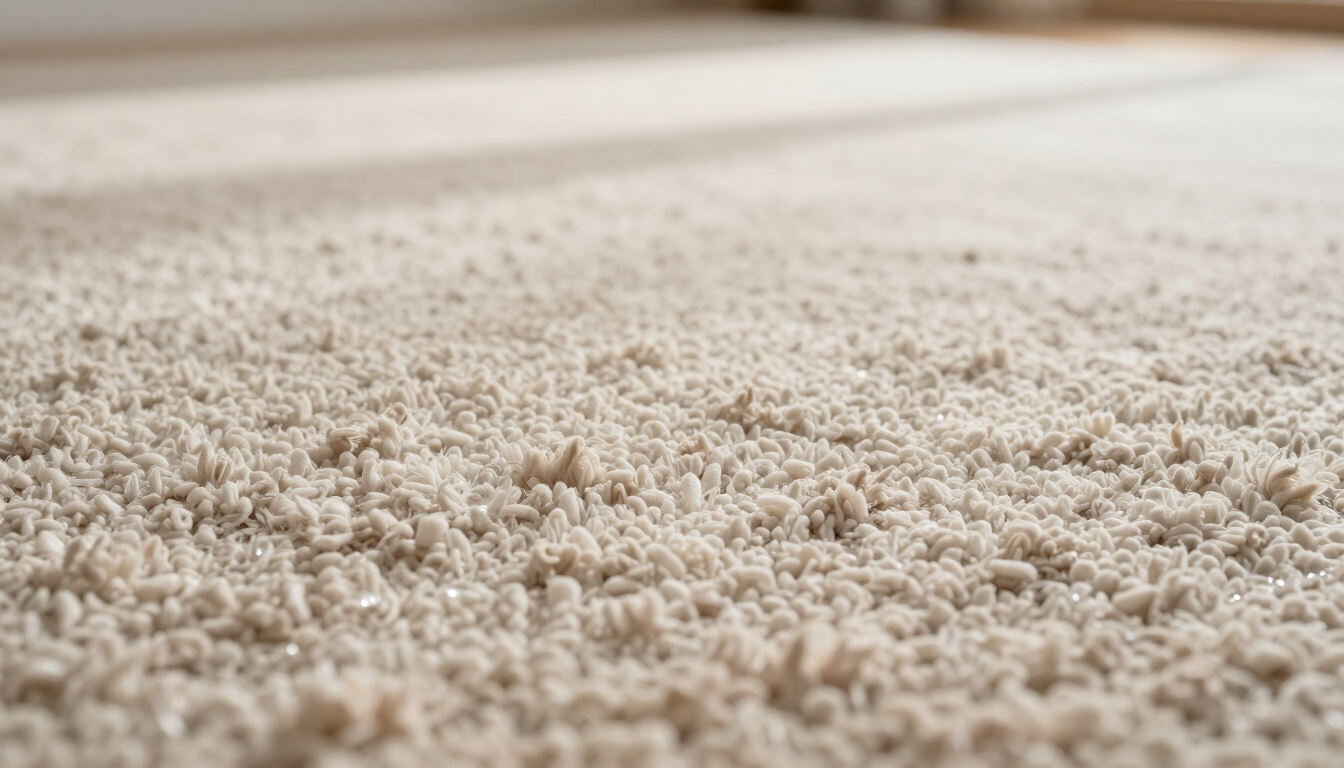

Why Your Carpet Still Smells Like Pet Urine After Cleaning

Principles Pro Services

Share this article

Your carpet still smells like pet urine after cleaning because the liquid has likely penetrated the fibers, padding, and subfloor. Moisture from cleaning can reactivate dried uric acid crystals, releasing ammonia gases. Without specialized subsurface extraction or enzyme treatments, surface cleaning alone cannot reach these deep-seated odor sources.

Living in Everett, Washington, we often deal with higher humidity levels throughout the year. While the Pacific Northwest is beautiful, that extra moisture in the air can exacerbate indoor odor issues. When you clean a carpet that has been previously soiled by a pet, the water you introduce acts as a catalyst. It essentially wakes up the dormant bacteria and chemical compounds that have been sitting in your flooring for weeks or even months. This is why many homeowners report that their home smells like a "wet dog" or a "dirty kennel" immediately following a DIY cleaning attempt or a low-cost professional service.

As an owner-operator with over 5,000 homes cleaned, I have seen this scenario play out time and again. Homeowners are often frustrated because they spent hours scrubbing or hired a company that promised a fresh home, only to have the stench return with a vengeance 24 hours later. The reality is that pet urine is not just a surface stain; it is a biological event that changes the chemistry of your carpet. To truly solve the problem, you have to understand exactly what is happening beneath the surface.

Why does pet urine smell worse after cleaning?

The primary reason the odor intensifies after cleaning is the presence of uric acid crystals. When a pet has an accident, the urine is initially in a liquid state. As it dries, the water evaporates, but the urea, proteins, and uric acid remain. These components form highly concentrated salts that bond tightly to the carpet fibers and the backing. Uric acid crystals are particularly stubborn because they are not water-soluble in their dried state.

When you or a cleaner applies water and soap, the moisture partially dissolves these salt crystals. As they begin to break down, they release ammonia gas and other volatile organic compounds (VOCs). This "off-gassing" is what hits your nose. Because the cleaning process has added moisture to the environment, the bacteria that feed on these organic materials also become more active. They begin to multiply and process the waste, creating that distinct, pungent odor.

Furthermore, if the carpet is not dried quickly—a common issue in the Everett climate—the prolonged dampness allows the odor to linger and even spread. Without professional-grade Steam Carpet Cleaning equipment that provides high-heat and high-vacuum suction, these crystals simply stay in the carpet, now refreshed and ready to stink for several more days.

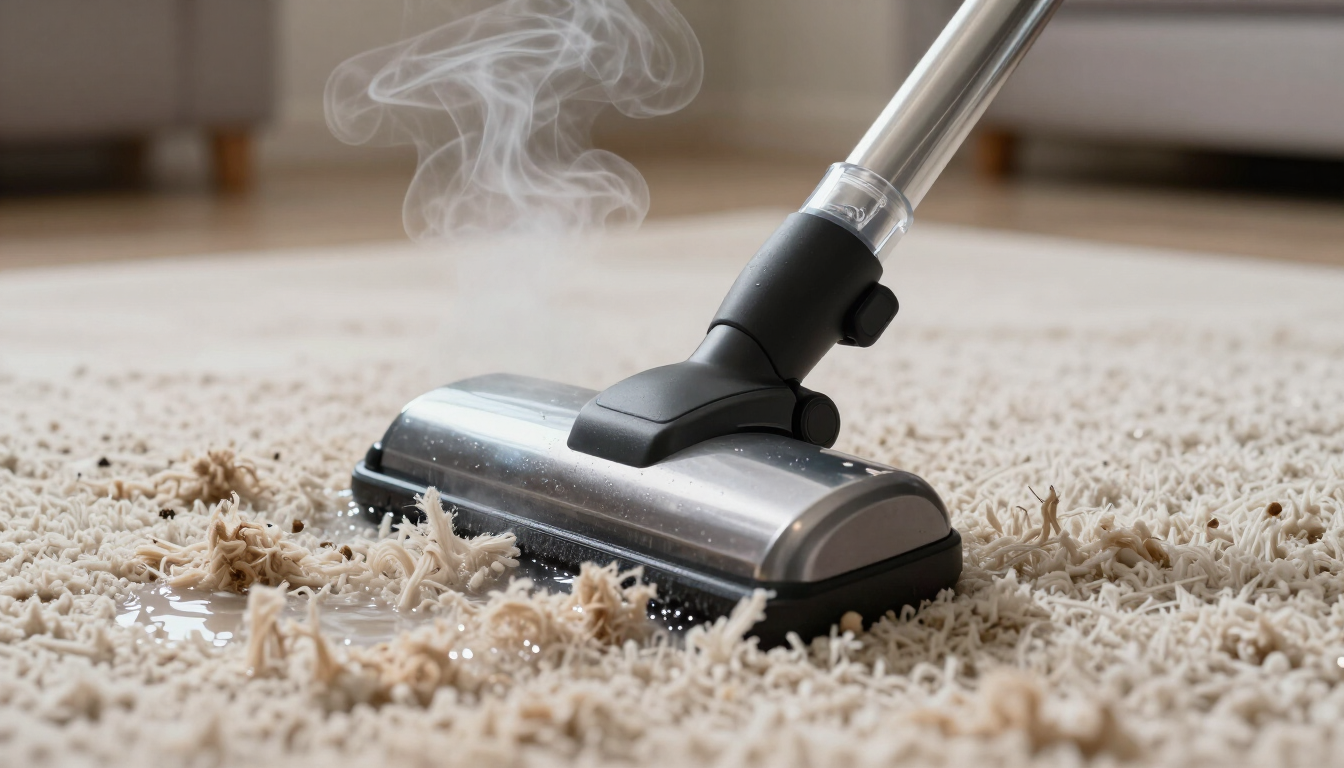
Professional carpet cleaning wand in action

The Role of Subfloor and Padding Contamination

One of the most overlooked aspects of pet odor removal is what lies beneath the visible carpet. Gravity is a powerful force. When a medium-to-large dog or a cat repeatedly uses the same spot, the liquid doesn't just sit on the tips of the fibers. It quickly moves downward, soaking through the primary and secondary carpet backing, into the polyurethane padding, and eventually into the wood or concrete subfloor.

This creates what we in the industry call an "odor reservoir." Think of your carpet like a sponge sitting on top of a thick cloth (the padding) which is sitting on a piece of wood (the subfloor). If you spill juice on the sponge, you can't just wipe the top of the sponge and expect the wood underneath to be dry. The padding acts like a secondary reservoir that holds onto the urine, keeping it damp and protected from standard cleaning methods.

When we perform Services for Everett homeowners, we often use moisture meters and UV lights to track exactly how deep the contamination has gone. If the urine has reached the subfloor, a simple surface steam clean will never be enough. The subfloor must be treated, or in extreme cases, the padding must be replaced and the subfloor sealed. Without addressing this hidden layer, the carpet still smells like pet urine after cleaning because the source of the smell is physically out of reach of the cleaning wand.

Can standard steam cleaning remove all pet odors?

Standard steam cleaning is excellent for general soil, allergens, and light staining, but it often falls short for heavy pet urine contamination. The temperature and the chemistry required to break down uric acid are very specific. Most DIY machines and budget-friendly rental units do not reach the 200+ degree temperatures necessary to effectively sanitize and break the chemical bonds of pet waste.

To effectively remove the smell, a professional must use a multi-step process that often includes:

  • Enzymatic Pre-treatment: Breaking down the proteins in the urine.
  • Oxidation: Using specialized oxygen-based cleaners to kill odor-causing bacteria.
  • Subsurface Extraction: Using a "water claw" or similar tool to pull liquid from the padding without removing the carpet.
  • High-Heat Steam: Utilizing truckmount equipment to flush out the loosened contaminants.

If a cleaner simply sprays a general detergent and runs a wand over the top, they are essentially just "rinsing" the surface. This can actually push the urine deeper into the padding. This is a primary reason why we emphasize the importance of hiring an IICRC-certified owner-operator who understands the chemistry involved. You can read more About our specific approach to these tough jobs and why direct accountability matters for quality results.

Carpet cleaning truckmount equipment

How do professionals treat deep pet urine stains?

Professional odor remediation involves more than just cleaning; it involves decontamination. When we arrive at an Everett home, we start by mapping the affected areas. We then apply a concentrated enzyme or oxidizing agent directly to the spots. These products are designed to "eat" the organic matter that the bacteria thrive on. Unlike household sprays that merely mask the smell with heavy perfumes, these professional-grade solutions neutralize the odor at the molecular level.

Once the solution has had time to dwell and break down the salts, we use high-powered extraction. Our truckmount system provides significantly more airflow and suction than any portable unit. This allows us to pull the moisture—and the dissolved urine—out of the carpet backing and padding. By removing the moisture quickly and thoroughly, we prevent the "wick-back" effect where stains and odors travel back up to the surface as the carpet dries.

The Owner-Operator Advantage for Everett Homeowners

Choosing a local owner-operator means you aren't getting a technician who is rushing to finish ten jobs in a day. When I handle a pet odor issue, I take the time to ensure the chemistry is right. Every home in Everett is different, and the way a carpet reacts to pet urine depends on the fiber type—whether it's nylon, polyester, or wool.

Because I am on every job personally, I can provide the detail-focused workmanship that larger companies often skip. We aren't just looking to make the carpet look clean; we want it to be clean and smell fresh for the long term. This commitment to quality is why we have helped over 5,000 homeowners reclaim their living spaces from pet-related issues. If you are struggling with persistent smells, don't hesitate to Contact us for a professional assessment.

Takeaways for a Fresh, Odor-Free Home

If your carpet still smells like pet urine after cleaning, it is likely due to deep-seated uric acid crystals or subfloor contamination that surface cleaning cannot reach. To fix the problem permanently, remember these key points:

  • Identify the Source: Use a UV light to find all spots, as urine often spreads further than it appears on the surface.
  • Use Enzymes: Only enzymatic or oxidizing cleaners can break down the chemical structure of dried urine.
  • Avoid Over-Wetting: DIY attempts often add too much water, which reactivates odors and can lead to mold if not extracted properly.
  • Hire Professionals: Look for IICRC-certified experts who use truckmount equipment for maximum heat and extraction power.
  • Check the Padding: In severe cases, the padding underneath the carpet may need professional subsurface treatment to remove trapped liquids.

By following these steps and ensuring a thorough, professional deep clean, you can finally eliminate pet odors and enjoy a healthy, fresh-smelling home in Everett.

Recent Posts

Owner-operated carpet cleaner at work in Everett WA
August 16, 2026
Discover why hiring an owner-operated carpet cleaner in Everett, WA offers better quality and accountability than big franchise chains for your home.
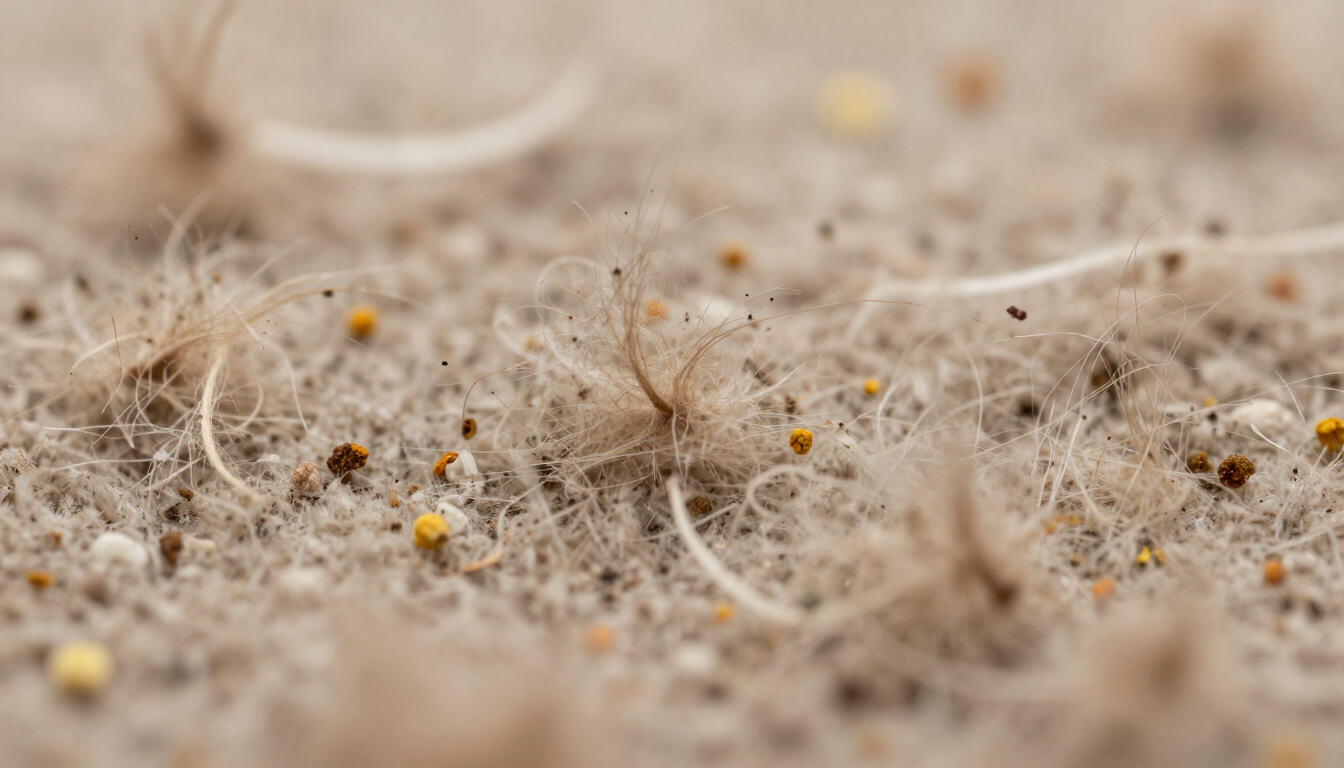
Microscopic view of allergens in carpet fibers
August 9, 2026
Discover what is hiding in your Everett home's carpet. Learn how allergens, dust mites, and pet dander impact indoor air quality and how professional steam cleaning helps.
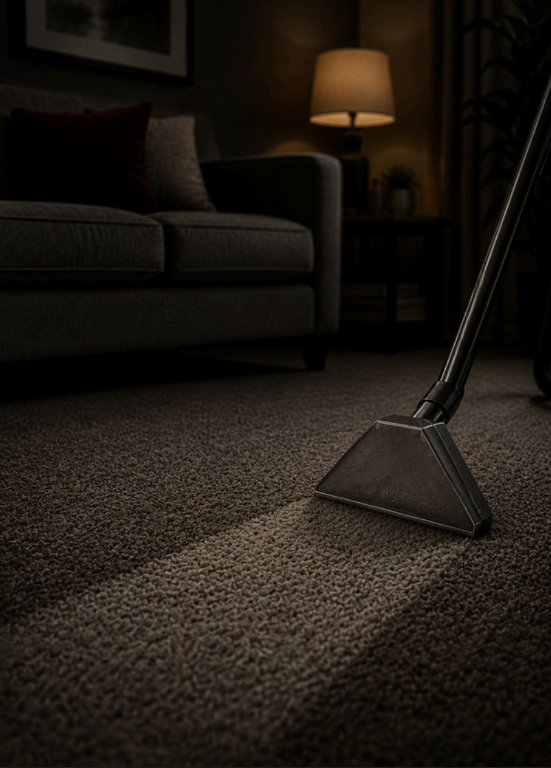
Carpet cleaner vacuuming a dim living room beside a sofa and lamp.
June 27, 2026
Learn why truckmount carpet cleaning delivers hotter water, stronger extraction, and faster drying than portable units in Everett, WA.
Empty carpeted basement room with gray walls, recessed lights, and a staircase in the center background
June 20, 2026
Discover why carpets can smell worse after cleaning in Everett, WA, and how pet contamination, wicking, and moisture contribute to odors.
June 16, 2026
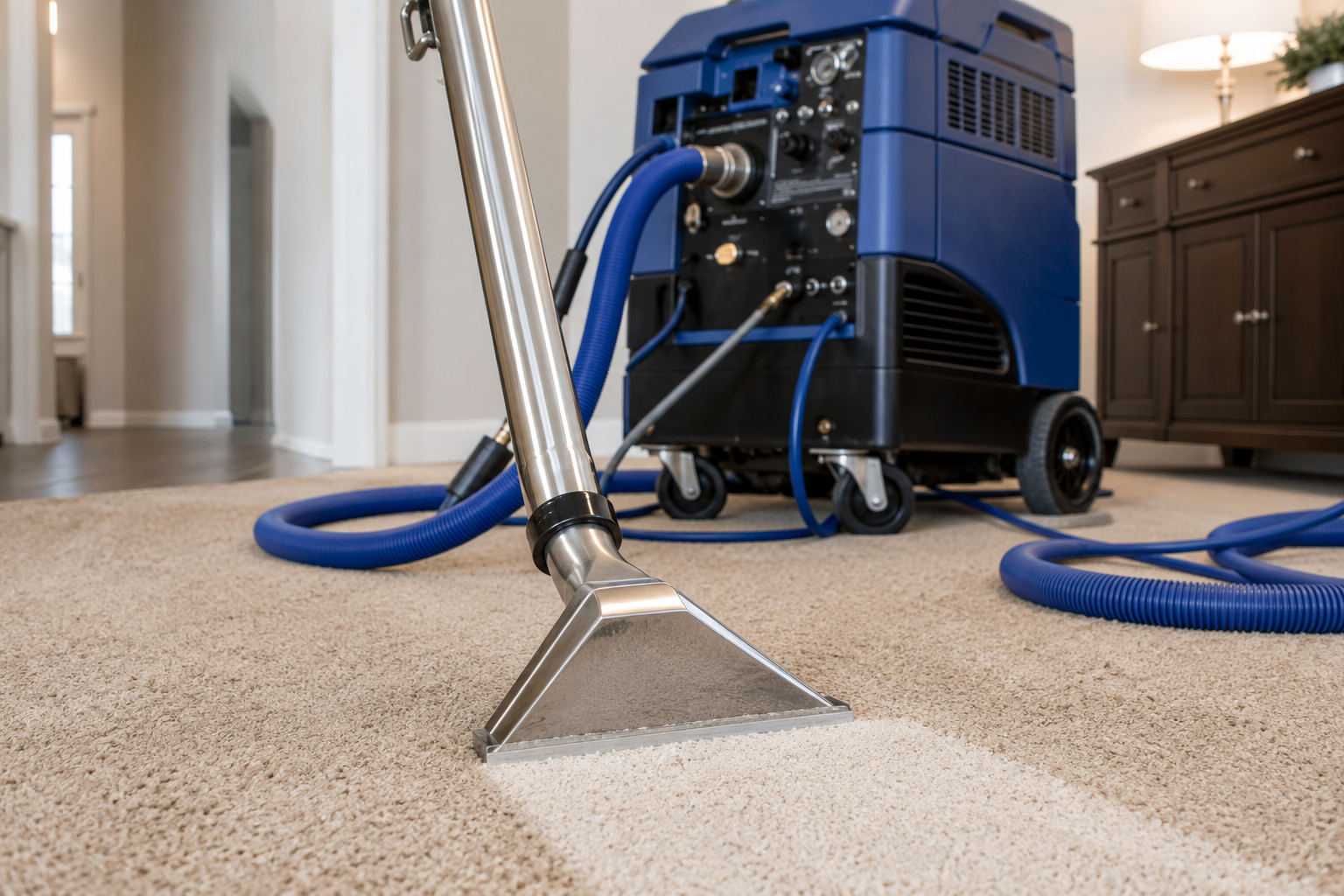
The type of equipment a carpet cleaning company uses in Everett, WA makes a more significant difference in your cleaning outcome than most homeowners realize before they book. Truckmount carpet cleaning equipment and portable carpet cleaning units operate on the same general principle of hot water extraction but produce results that are not comparable in terms of water temperature, suction power, and the amount of moisture left in your carpet when the technician leaves. Understanding the difference before you hire a company in Everett protects you from paying for a result that does not match what you were expecting.
June 16, 2026
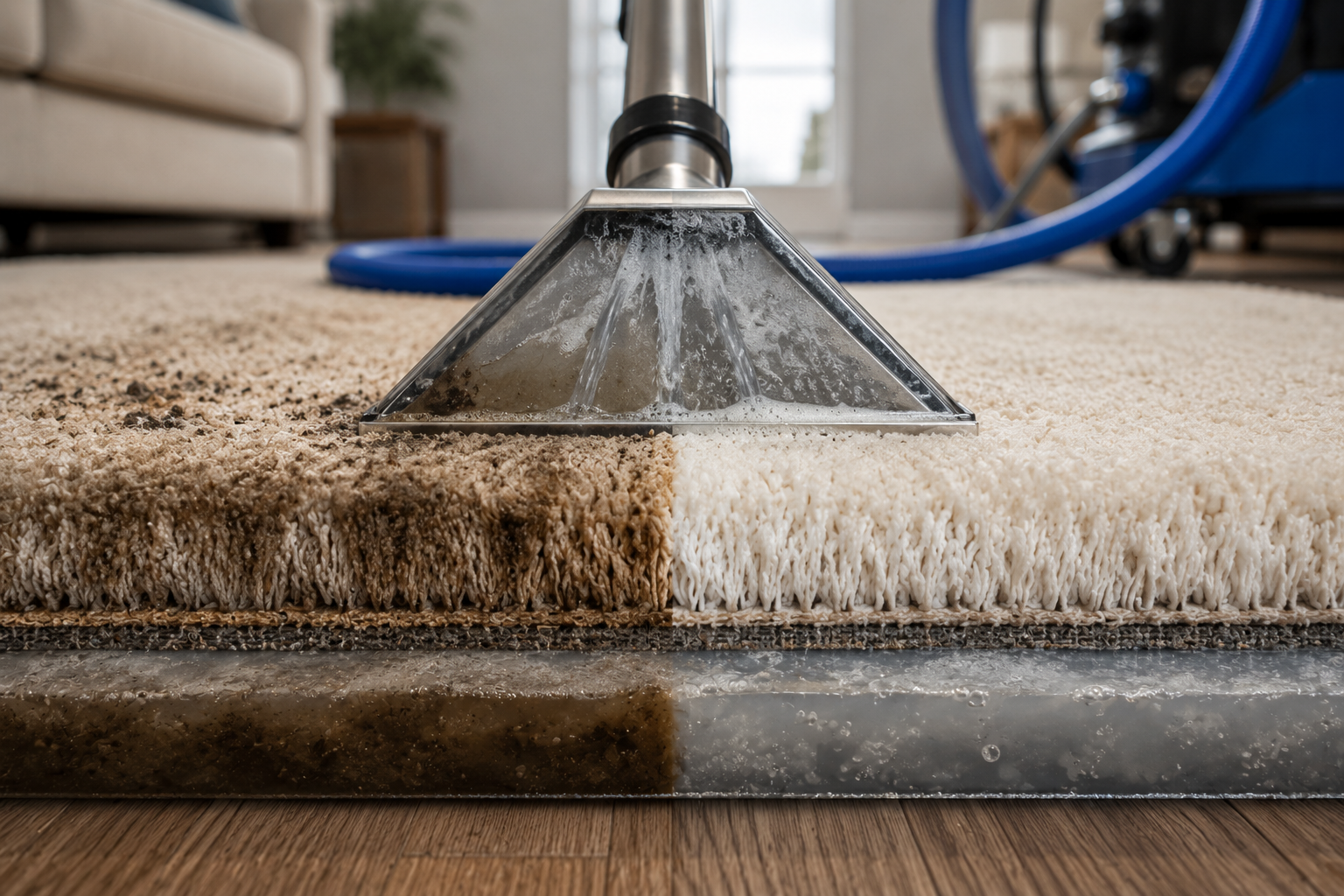
Hot water extraction is the carpet cleaning method recommended by every major carpet manufacturer in the United States and required by most carpet warranties to remain valid. In Everett, WA, where wet Pacific Northwest conditions accelerate soiling and moisture-related contamination in carpet fiber, hot water extraction consistently outperforms every alternative cleaning method for the specific soil profile that Everett homes accumulate. Understanding what the method actually does to your carpet explains why the results last longer and clean deeper than dry cleaning, bonnet cleaning, or consumer shampoo machines.